
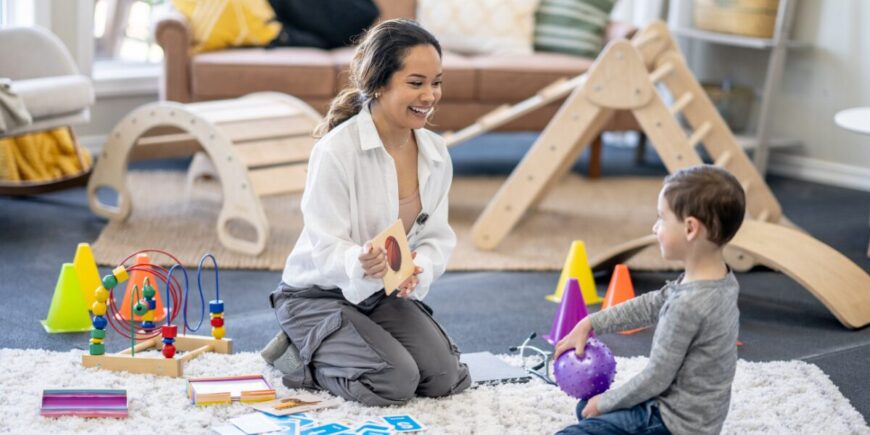
Helping children build meaningful friendships is one of the most rewarding parts of our work at Aim Higher ABA here in Atlanta. Many families come to us because their child struggles with connecting, communicating, or feeling confident during group activities. One of the most effective ways we support social development is through group ABA therapy games.
These structured, fun, and goal-driven games help children learn how to interact with peers in a safe, supportive environment. Whether improving turn-taking, sharing, cooperation, or simple conversation skills, group ABA therapy games can guide children toward stronger social abilities that last a lifetime.
In this blog, we’ll walk you through what makes these games powerful, how they support friendship building, and why our team at Aim Higher ABA includes them in personalized treatment plans. Our goal is to help families understand how group-based play can help children connect naturally and confidently with others—both during therapy and beyond.
Why Group ABA Therapy Games Matter for Social Development
Children don’t just learn social skills by listening—they learn them by doing. Group ABA therapy games create a learning environment where children can practice real-life interactions in enjoyable, structured settings.
Here’s why these games are so effective:
1. They Encourage Natural Peer Interaction
Games give children opportunities to communicate, cooperate, and problem-solve with others. These interactions allow social skills to grow naturally rather than feeling forced.
2. They Build Confidence
When children participate in group activities and experience success, their confidence rises. They feel more comfortable approaching peers and trying new activities.
3. They Strengthen Emotional Understanding
Games help children understand feelings like excitement, disappointment, and accomplishment in a simple and healthy way. They learn how to respond calmly and respectfully to others.
4. They Support Communication Skills
During group activities, children practice asking questions, listening, taking turns speaking, and understanding simple instructions.
5. They Create Opportunities to Form Friendships
Friendships grow when kids share experiences. Group ABA therapy games create positive shared moments that lead to connection.
At Aim Higher ABA, we use evidence-based, structured group games that promote these skills while keeping sessions fun and engaging. Our programs in Atlanta focus on building confidence, cooperation, and connection—one small step at a time.
How We Use Group ABA Therapy Games at Aim Higher ABA
Every child learns uniquely, so our approach to group ABA therapy games is personalized. We start by understanding the child’s needs, strengths, and goals. Then we select or create group games that support their social, communication, and behavioral objectives.
Here’s how our team integrates these games into our services:
Small Group Structure
We keep groups small so children feel comfortable and get the support they need. This helps build trust among participants.
Goal-Based Activities
Every game has a purpose. Whether practicing cooperation or learning to follow simple group instructions, we choose games that support growth.
Positive Reinforcement
We celebrate every success—big or small. Positive reinforcement makes participation more enjoyable and motivates children to keep trying.
Real-World Practice
We design the activities to reflect everyday situations, allowing children to practice skills they can use at home, school, and community settings.
Professional Guidance
Our trained team members guide each game gently, ensuring every child has a fair chance to participate, communicate, and succeed.
Aim Higher ABA takes pride in making learning enjoyable. When children feel safe, supported, and excited through group ABA therapy games, they usually engage more freely and build stronger friendship skills.
Top Group ABA Therapy Games That Build Friendship Skills
Below are some of the most effective and enjoyable group ABA therapy games we use to help children build meaningful relationships.
1. The Cooperation Circle
This game encourages teamwork and communication. Children stand in a circle holding a lightweight object (such as a ball) that they must pass around without dropping it. Each turn requires focus, patience, and cooperation.
Friendship skills supported:
- Working together
- Sharing responsibility
- Encouraging peers
At Aim Higher ABA, we often use the Cooperation Circle for groups learning how to follow group instructions and participate in structured play.
2. Emotion Matching Games
Children take turns choosing picture cards and matching them with similar expressions others hold. They learn to identify and understand different emotions.
Friendship skills supported:
- Recognizing feelings
- Responding calmly
- Building empathy in social moments
This game also helps children develop awareness of how their own actions can affect others, a key element of building friendships.
3. Follow-the-Leader Movement Games
In this activity, children take turns being the leader while others follow simple movements. This game is simple, fun, and highly effective for improving group interaction.
Friendship skills supported:
- Taking turns
- Paying attention
- Being part of a shared activity
We find that children gain confidence when they get their turn to lead, and they enjoy supporting peers when it’s their turn.
4. Conversation Ball Toss
Using a soft ball, children toss to a peer and ask or answer simple questions. This activity helps them practice communication in an engaging, structured way.
Friendship skills supported:
- Asking questions
- Listening
- Showing interest in others
Our team guides the questions so children feel supported, and this helps them practice healthy peer communication.
5. Team Puzzle Challenges
Children work together to assemble a simple puzzle. Each child gets different pieces, and they must communicate and collaborate to complete the picture.
Friendship skills supported:
- Cooperation
- Problem-solving
- Supporting others
Kids often feel proud when they contribute to a shared goal, which strengthens peer connections.
How Group ABA Therapy Games Improve Friendship Skills
Repeated practice creates strong habits. Over time, group ABA therapy games help children learn how to communicate better, understand peers, and participate more comfortably in group environments.
Here’s how these games transform social ability:
1. They Teach Turn-Taking
Taking turns is one of the building blocks of positive social interaction. Games make turn-taking fun rather than stressful.
2. They Build Conversation Confidence
Through structured activities, children learn to initiate conversations, respond appropriately, and stay engaged.
3. They Improve Flexibility
Games often involve small changes, allowing children to learn how to adapt and stay calm during group interactions.
4. They Support Cooperative Play
Friendships grow when children learn how to share space, toys, and ideas with others.
5. They Reduce Social Anxiety
With guidance and encouragement, children feel safe exploring new interactions, which helps them feel more comfortable in school, home, and community settings.
At Aim Higher ABA, we see the power of group ABA therapy games every day. Children begin to connect with others more easily, share joyful moments, and develop relationships that bring a sense of belonging.
Aim Higher ABA: Our Service Perspective
At Aim Higher ABA in Atlanta, our mission is to help children learn, grow, and build stronger social connections through compassionate, structured support. Our Applied Behavior Analysis services are thoughtfully created to address important day-to-day challenges and skill areas, including:
• Self-Management Skills
Helping children learn how to stay calm, organized, and in control during different situations.
• Daily Routines
Supporting smoother mornings, evenings, and transitions through consistent, structured strategies.
• Tantrums
Reducing overwhelming moments by teaching healthier ways to express needs and feelings.
• Destructive and Self-Injurious Behaviors
Using safe, supportive interventions that focus on replacement behaviors and emotional regulation.
• Communication
Strengthening the child’s ability to express themselves clearly and understand others.
• School Readiness
Building foundational skills such as participation, following simple group instructions, and staying engaged.
• Social Skills
Helping children learn how to interact with peers, share, and take turns through guided group ABA therapy games.
• Inappropriate Behaviors
Teaching healthier responses and guiding children toward positive actions in different settings.
• Toileting
Providing step-by-step, supportive training that builds independence and confidence.
• Eating
Encouraging healthy eating routines and supporting smoother mealtime behaviors.
• New Environments
Preparing children to feel comfortable, confident, and safe in places they are not familiar with.
• Following Directions
Improving listening, cooperation, and the ability to respond calmly to simple instructions.
Our team includes these goals within both individual and group ABA therapy games, helping children practice social interactions while also building essential life skills. Many families across Atlanta share how much progress they begin to see—better communication, improved cooperation, and stronger connections with peers—once their child starts participating in our supportive group programs.
Real Benefits Families Notice Over Time
After consistent practice, families often notice improvements such as:
- Better cooperation at home
- Improved communication
- More successful interactions with peers
- Increased confidence in group settings
- Reduced frustration during social moments
These changes are powerful because they improve everyday life—not just therapy time.
Final Thoughts
Building friendships is an important part of growing up, and children deserve the chance to enjoy positive social moments with peers. Group ABA therapy games make this possible by creating structured, enjoyable learning experiences that promote real connection.
Here in Atlanta, Aim Higher ABA is committed to helping children grow socially, emotionally, and behaviorally through compassionate, personalized care. Our goal is to support families and help every child reach their highest potential—one meaningful interaction at a time.
If you want more information or want to learn how our group programs can help your child, feel free to reach out. We’re here to support you every step of the way.
FAQs
What are group ABA therapy games?
Group ABA therapy games are structured activities that help children practice communication, cooperation, turn-taking, and social interaction. They are designed using principles of Applied Behavior Analysis to support meaningful skill development. These games help children connect with peers in fun and supportive ways.
How do these games help build friendship skills?
They allow children to practice real social behaviors like sharing, listening, and working together. Over time, this builds confidence and helps them approach peers with more comfort. The shared positive experiences during games help form natural social connections.
How does Aim Higher ABA use these games in sessions?
Our team selects games based on each child’s goals and creates a safe, structured group environment. We guide the activities so children feel encouraged, supported, and ready to participate. The skills learned during games are practiced across sessions and everyday settings.
Are group ABA therapy games suitable for all ages?
Yes, these games can be adapted for different age groups and learning levels. We choose activities that match each child’s developmental stage so they feel confident and engaged throughout the session.
How long does it take to see progress?
Many families begin noticing improvements within weeks, especially in communication and cooperation skills. Consistency is key, and regular participation helps children gain confidence and apply these skills in real-life situations.

 Previous Post
Leave Your Comment