
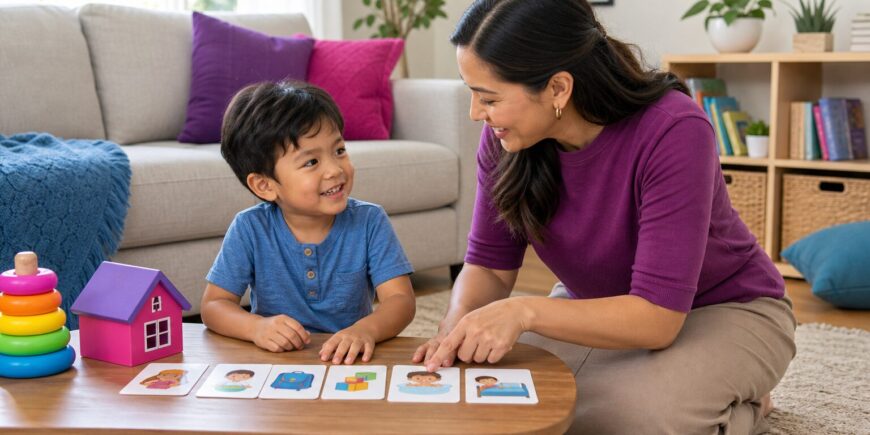
Positive behavior support at home is a way to make hard routines feel more manageable for your child and for you. It starts with looking at what is making the moment hard, teaching one skill that would help, and reinforcing progress early instead of waiting for everything to go perfectly. When mornings, homework, screen transitions, or bedtime keep going off track, a simple plan can ease some of that pressure.
For many families, the goal is not perfect behavior. It is a calmer home, clearer communication, and routines that feel a little less exhausting. Positive behavior support gives you a way to respond with more clarity and less guesswork.
What Positive Behavior Support at Home Actually Means
At home, positive behavior support means setting up routines so your child has a better chance of succeeding, not just reacting after things get hard. It focuses on reducing obstacles, teaching useful skills, and responding in a consistent, supportive way.
Quick Summary
- Start with one routine that keeps breaking down.
- Look at prevention, teaching, and response together.
- Reinforce small wins early.
- Keep expectations clear and realistic.
- Match the plan to your child’s age and skill level.
- Get individualized support if safety becomes a concern.
You may see the terms Positive Behavior Support (PBS) and Positive Behavioral Interventions and Supports (PBIS) used in slightly different ways. PBIS is often tied to schools, while PBS is a broader term. At home, the difference usually matters less than the shared goal: helping children build skills, communicate more clearly, and move through daily routines with less stress.
ABA-informed support often uses that same logic in everyday life. If you want a simple breakdown of reinforcement, this guide to supporting and reinforcing good habits is a helpful companion.
Why Behavior Happens Before It Changes
When a routine keeps going sideways, it helps to look at the full pattern instead of only the hardest moment. Behavior is often connected to what happened right before it, what skill may be missing, and what response happens afterward.
A child may resist because the task feels too big, the transition is abrupt, the environment is overwhelming, or they do not yet have an easier way to communicate what they need. That is why support at home is not only about consequences. Prevention matters because the setup around a routine can lower stress before the problem starts. Teaching matters because many difficult moments are tied to skill gaps like asking for help, waiting, shifting activities, or tolerating a change. Response matters because adult reactions can either support learning or keep the cycle going.
A simple way to think about it is:
- Before the behavior: What happened right before the routine became hard?
- Missing skill: What might your child need help doing instead?
- After the behavior: What happened next, and did it calm the pattern or make it bigger?
You do not need to figure out the exact reason from one rough moment. The goal is to notice patterns and make one useful change at a time. Younger children often need more visual support and smaller steps. Older kids often do better when they have more collaboration and a little more ownership. This guide on supporting ABA skills at home goes deeper on carrying those supports into everyday routines.
The RESET Home Support Map
R: Read the pattern
Start with one routine and one repeated behavior. That narrower focus makes it easier to see what is actually happening. Look at what tends to happen right before the problem, what your child may be trying to communicate, and what usually follows.
For example, maybe the hard part is not mornings in general. Maybe it is the exact moment when the tablet gets turned off, shoes need to go on, or a non-preferred task begins. The more specific you get, the easier it is to build a plan that fits.
E: Engineer the setup
Try changing the routine before the hard moment starts. That might mean a visual schedule, a short warning, fewer distractions, a simpler direction, or a first-then cue. Sometimes a small adjustment to timing or wording can take some of the heat out of the routine.
Consistency matters here. When adults use similar cues, similar timing, and similar follow-through, routines become easier to predict. If predictability is a challenge, this article on why routines help children feel more secure and successful is worth reading.
S: Select the skill to teach
Choose the smallest skill your child can realistically use in that moment. That could be asking for help, waiting briefly, using a break card, following a first-then cue, or moving to the next step with a visual prompt.
This matters because a skill that sounds reasonable on paper can still be too hard to use in the middle of frustration. If the expectation is too big for the moment, the plan will be hard to follow. Smaller, more usable skills are often what move the routine forward.
E: Encourage the right win fast
Reinforcement works best when it is immediate, specific, and meaningful. You do not have to wait for the whole routine to go perfectly. Reinforce the early success instead. That might look like noticing when your child starts the task, hands over the tablet, asks for help, or recovers more quickly after frustration.
The point is to show your child which step is worth repeating. If you want more examples, this breakdown of reinforcement strategies for parents offers practical ideas.
T: Track and tune
Watch what changes over several days. Is the routine getting a little easier? Is your child using the new skill more often? Are adults staying consistent? If the plan is not helping, make it smaller, simplify the wording, or adjust the support before the moment starts.
If the routine still feels intense or confusing, those notes can be very useful in a parent-training or BCBA conversation. Sometimes the next right step is not trying harder. It is getting more precise support.
How to Use Positive Behavior Support in Common Home Routines
Morning routines and getting out the door
Morning stress often builds because too many things are happening too quickly. A child may be moving from sleep to dressing to breakfast to leaving the house without enough structure in between. Visual sequences, one-step directions, first-then prompts, and early reinforcement for cooperation can make mornings feel less overwhelming.
If mornings are a frequent struggle, these ideas for building more predictable daily routines can help you create a steadier start.
Transitions off screens or preferred activities
Leaving a preferred activity is hard because your child is not just stopping one thing. They are shifting attention, tolerating disappointment, and moving toward something they may want less. A countdown alone does not always solve that.
It often helps to pair a clear warning with a visual timer, a simple next step, a small choice, and reinforcement for moving on. If this is a common flashpoint, these strategies for making screen time transitions easier can give you more ideas.
Homework, start tasks, or other non-preferred demands
Many homework battles are really start-task problems. The work may feel too big, too unclear, or too draining to begin. Breaking tasks into smaller chunks, building in short breaks, and reinforcing the attempt to start can be more helpful than waiting for full completion.
Older children may also do better when they help choose the order of tasks or when breaks happen. This article on using ABA strategies in everyday life expands on ways to make those moments feel more manageable.
Bedtime, sibling friction, or other recurring stress points
The same principles still apply, even when the routine changes. Bedtime may need a clearer wind-down pattern, fewer last-minute demands, or stronger cues that sleep is the next step. Sibling conflict may need pre-taught language, clearer turn-taking support, or faster adult coaching before frustration builds.
If sibling tension is part of the pattern, this piece on supporting siblings through conflict more calmly may be useful.
What to Do When Prevention Is Not Enough
Even a thoughtful plan will not prevent every hard moment. When behavior escalates, the first goal is safety, not a perfect teaching moment. Keep language short, reduce extra demands when you can, and try not to pull the moment into a power struggle.
Later, when your child is calmer, you can look at what happened and what may need to change next time. That might mean adjusting the setup, simplifying the skill you are teaching, or changing what you reinforce.
If aggression, self-injury, property destruction, or severe disruption is part of the pattern, families often need more individualized support. Calm responses matter, but they are not always enough on their own. This article on understanding triggers behind tantrums and escalation can help parents think through those moments in a more supportive way.
When home strategies may not be enough
If the same routine keeps breaking down even after consistent changes, or if safety is becoming a concern, it may be time for parent coaching or BCBA input. That does not mean you have done something wrong. It usually means the plan needs more support, more clarity, or a closer look at what your child is communicating.
If you are wondering what that kind of help looks like, this overview of how parent training can support positive discipline explains how guided support can make daily routines feel more workable.
At-Home Behavior Support Builder
If you want a simple place to start, use this checklist for one routine at a time:
- Routine snapshot: Which routine are you focusing on?
- Hardest moment: What exact part keeps falling apart?
- Before-the-behavior clues: What usually happens right before it?
- What your child may be communicating: What seems hard in that moment?
- Positive expectation: What do you want your child to do instead?
- Replacement skill: What is the smallest skill they can realistically use?
- Support plan: What visual, prompt, warning, or setup change could help?
- Reinforcement plan: What will you notice and reinforce right away?
- Calm response plan: How will adults respond if the behavior escalates?
- What to track for 1 week: What signs of progress will you watch for?
- Who is leading the plan: Which adult is keeping it consistent?
- Who else should use the same cue: Would another caregiver or school team help?
- When to ask for more support: What signs tell you the plan needs added guidance?
Use it as a planning tool, not a full behavior log. Small changes are easier to test, and one routine is usually enough to start.
FAQ
What is positive behavior support at home?
Positive behavior support at home is a way to make routines easier by teaching skills, adjusting the environment, and reinforcing progress. The goal is to help children succeed without making punishment the center of the plan.
How can parents use PBIS at home?
Parents can use PBIS at home by setting clear expectations, using predictable cues, teaching replacement skills, and noticing success early. At home, it usually works best when the plan is simple enough to use in real routines.
How do you reinforce good behavior at home without punishment?
Notice the small win quickly and name exactly what your child did well. Specific praise and meaningful reinforcement are usually more helpful than waiting for perfect behavior. This parent-friendly reinforcement guide shares more examples.
What should parents do when a child shows challenging behavior at home?
Stay as calm as you can, protect safety, keep language short, and avoid turning the moment into a power struggle. Once your child is regulated again, return to the plan and adjust the setup for next time.
How do routines and expectations improve behavior at home?
Predictable routines reduce uncertainty and help children understand what comes next. Clear expectations, visual supports, and consistent cues across caregivers make it easier for children to use the skills they are learning.
When should a family ask for professional support?
Families may want more support when behavior is persistent, significantly disrupts daily life, raises safety concerns, or still feels unclear after consistent changes at home.
If you are trying to make one routine easier and keep hitting the same wall, Aim Higher ABA offers personalized support that connects home routines, parent coaching, and real-world skill building. Learning more about parent training support can be a helpful next step.

 Previous Post
Leave Your Comment