
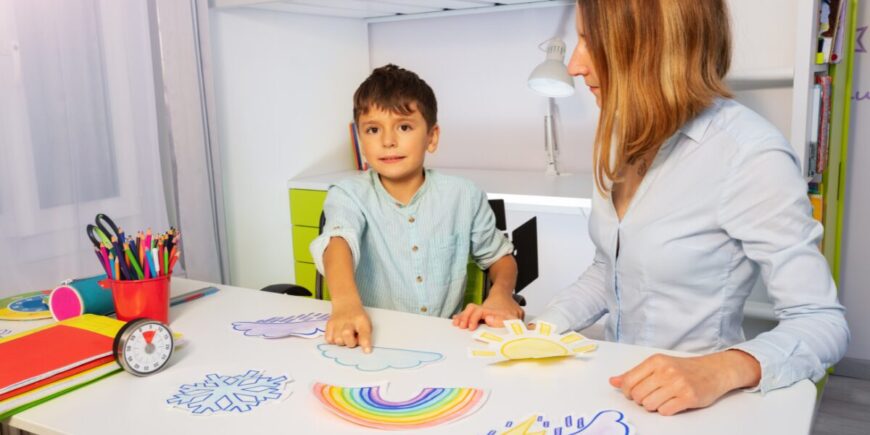
In-home ABA therapy can help children build important daily living skills in the environment where they use those skills most often. Families often choose in-home ABA therapy because it allows children to practice routines such as dressing, brushing teeth, eating meals, cleaning up, and following directions within their normal day-to-day schedule. These everyday tasks may seem simple, but for many children with autism, they can be difficult without structured support.
At Aim Higher ABA, in-home ABA therapy focuses on helping children develop communication, independence, and daily living skills through personalized programs. Learning these skills at home can help children become more confident and allow families to see progress in routines that matter most.
Why Daily Living Skills Matter
Daily living skills are the tasks children need in order to participate more independently in everyday life. These skills can include hygiene, dressing, mealtime routines, following schedules, cleaning up, toileting, and basic household responsibilities.
When children build daily living skills, they may become more independent at home, more confident in school and social settings, and better prepared for long-term success. Daily living skills can also reduce stress for parents because routines become easier and more predictable over time.
In-home ABA therapy is especially effective for teaching these skills because children can learn them in the place where they naturally happen. Instead of practicing tooth brushing with pretend materials in a clinic, children can practice in their own bathroom with their own toothbrush and routine.
Examples of Daily Living Goals in ABA Therapy
Daily living goals in ABA therapy are individualized based on the child’s age, developmental level, strengths, and family priorities. Some children may focus on basic self-care skills, while others may work on completing more complex routines independently.
Common daily living goals in in-home ABA therapy may include:
- Brushing teeth independently
- Washing hands with minimal prompts
- Getting dressed without assistance
- Putting on shoes and socks
- Using the bathroom independently
- Following a morning routine
- Cleaning up toys after playtime
- Sitting at the table during meals
- Trying new foods
- Using utensils correctly
- Packing a backpack for school
- Following bedtime routines
- Completing chores such as putting clothes away
Families can learn more about how these goals are addressed through in-home ABA therapy services and individualized treatment planning.
How In-Home ABA Therapy Builds Daily Living Skills
In-home ABA therapy helps children learn daily living skills by breaking routines into smaller, manageable steps. Therapists teach one part of a task at a time so children do not feel overwhelmed.
For example, if a child is learning how to brush their teeth, the therapist may teach the routine in steps such as:
- Pick up the toothbrush
- Put toothpaste on the brush
- Brush the top teeth
- Brush the bottom teeth
- Rinse the toothbrush
- Put the toothbrush away
Once the child masters one step, the therapist adds the next step until the full routine can be completed more independently.
This approach can also be used for getting dressed, preparing for school, washing hands, or cleaning up after meals. Breaking tasks into smaller parts helps children build confidence while reducing frustration.
Reinforcement in Daily Routines
Positive reinforcement is one of the most important tools used in ABA therapy. Reinforcement means giving the child something motivating after they complete a skill or show a desired behavior.
For example, if a child completes part of their morning routine, they may earn praise, a preferred toy, a sticker, extra playtime, or another reward that motivates them.

Reinforcement helps children connect their actions with positive outcomes, which can increase the likelihood that they will repeat the skill in the future.
In-home ABA therapy makes reinforcement easier because therapists can use natural rewards within the child’s routine. For example:
- After putting on shoes, the child gets to go outside
- After washing hands, the child can have a snack
- After cleaning up toys, the child can choose a favorite activity
- After completing bedtime tasks, the child can read a favorite book
Using natural reinforcement can make routines feel more meaningful and easier to maintain over time.
The Parent’s Role in Daily Living Skills
Parents play a major role in helping children build daily living skills at home. Because parents see their child throughout the day, they have many opportunities to practice routines outside of therapy sessions.
Therapists often work with parents to create simple strategies that can be used during everyday activities. Parents may learn how to:
- Give clear instructions
- Use visual schedules
- Provide reminders and prompts
- Reinforce positive behavior
- Break tasks into smaller steps
- Create consistency across routines
Parent involvement is important because children are more likely to make progress when they practice the same skills regularly. Families who want additional support with home routines may also benefit from parent training services as part of an in-home ABA program.
Measuring Progress in Daily Living Skills
Progress in ABA therapy is usually measured through data collection and observation. Therapists track how often a child completes a task, how many prompts are needed, and whether the child can perform the skill independently.
For example, a therapist may record:
- How many steps of a routine the child can complete alone
- How often the child needs reminders
- Whether challenging behaviors are decreasing
- How long it takes the child to finish a task
- Whether the child can use the skill in different settings
Over time, these progress markers help families and therapists see what is improving and where additional support may still be needed.
Families may also begin the process with an ABA assessment to identify which daily living skills should be prioritized based on the child’s needs.
How Early Intervention Supports Daily Living Skills
Early intervention can be especially helpful for building daily living skills because younger children are often still learning routines and habits. Starting therapy early can help children develop foundational skills that support greater independence later in life.
For example, a young child may begin by learning how to sit at the table during meals, wash hands before eating, or clean up toys after playtime. These early skills can later support more advanced routines such as dressing independently, completing chores, or preparing for school.
Because home-based therapy happens in real-life settings, children can practice skills consistently and naturally throughout the day.
Conclusion
Families often choose in-home ABA therapy because it helps children practice important life skills in the environment where they use them most. Therapy sessions can focus on routines that matter to the family, making progress more practical and meaningful.
In-home ABA therapy can support independence, reduce frustration around routines, and help children feel more confident with everyday tasks. By combining therapist guidance, parent involvement, and consistent practice, children can build daily living skills that improve their quality of life over time.
Families interested in learning more about in-home ABA therapy and daily living skill development can explore services through Aim Higher ABA.
FAQs
What are daily living skills in ABA therapy?
Daily living skills are everyday tasks such as brushing teeth, getting dressed, washing hands, eating meals, cleaning up, and following routines.
How does in-home ABA therapy help with daily living skills?
In-home ABA therapy helps children practice skills in their natural environment. Therapists break routines into smaller steps and use reinforcement to encourage progress.
What daily living goals can children work on in ABA therapy?
Children may work on dressing, hygiene, toileting, mealtime routines, following schedules, cleaning up, and other tasks that support independence.
Why is parent involvement important in building daily living skills?
Parents help reinforce skills outside of therapy sessions. Practicing routines consistently at home can help children make faster and more lasting progress.
How do therapists measure progress in daily living skills?
Therapists measure progress by tracking how independently a child completes tasks, how many prompts are needed, and whether the child can use the skill consistently.
Can early intervention help with daily living skills?
Yes, early intervention can help children build important daily living skills at a younger age, which may support greater independence later in life.
Why is in-home ABA therapy effective for teaching daily living skills?
In-home ABA therapy is effective because children learn and practice skills in the exact environment where those routines happen every day.

 Previous Post
Leave Your Comment