
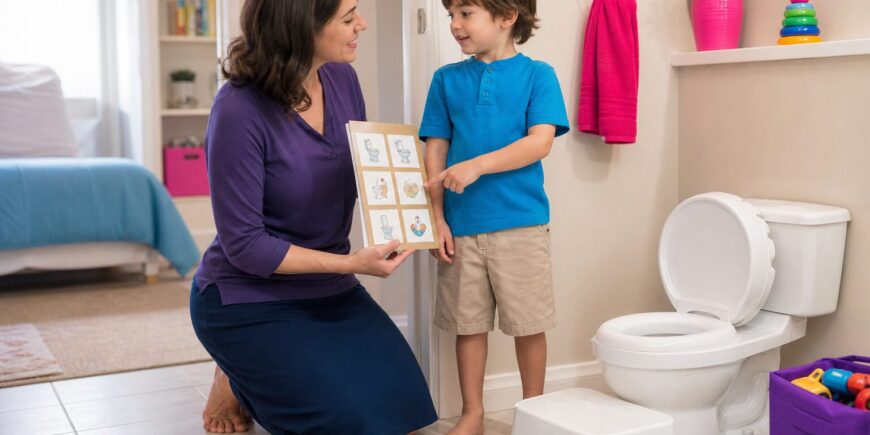
If you’re trying to figure out how to potty train an autistic child, the most helpful place to start is with readiness, not age. A simple plan, a predictable routine, sensory support, and steady encouragement usually go much further than pressure or a one-size-fits-all method.
If this has felt stressful, you are not alone. Potty training can be tiring for any family, and it can feel even heavier when your child has communication differences, sensory sensitivities, or a hard time with transitions. The good news is that progress does not have to look perfect to be meaningful. Small wins count.
This guide walks through how to tell if your child is ready, what to set up before you begin, how to build a routine that feels manageable, and what to do if progress slows down.
A Quick Answer: What Helps Most When Potty Training an Autistic Child
Many autistic children do best with a toilet training plan that is clear, visual, and easy to repeat. In most cases, that means checking for readiness first, ruling out pain or constipation with a pediatrician when needed, using supports like a visual schedule or social story, and adjusting the environment so the bathroom feels less overwhelming.
Quick Summary
- Progress is usually based on readiness, not age.
- Early success often comes from changing the setup before asking for more from your child.
- Short, predictable bathroom visits usually work better than long sits.
- If your child is minimally verbal or nonverbal, this guide on toilet training support for nonverbal children can help you adapt communication and prompting.
- There is no single timeline that works for every child, and pushing through pain, fear, or distress usually makes things harder.
How to Know if Your Child Is Ready to Start
Readiness is different from outside pressure. A child may be a certain age, starting preschool, or getting questions from family members and still not be ready yet. That does not mean progress will not happen. It just means the timing or the setup may need work first.
A helpful way to think about readiness is to look at three areas:
- Skill readiness: Your child notices when they are wet or dirty, can stay dry for short stretches, can tolerate sitting briefly, and can respond to a simple cue like “bathroom time.”
- Routine readiness: You can build some consistency at home, clothing is easy to remove, and the adults involved can follow a similar plan.
- Medical readiness: There are no obvious signs that pain, constipation, stool withholding, urinary issues, or strong distress are getting in the way.
Toddlers and preschoolers often need short sits, simple language, and more parent-led structure. School-age children and older kids may need more privacy, more dignity-focused language, and more consistency between home and school.
If your child already does better when the day follows a familiar pattern, it may help to build from daily routines that support more predictable success. That can make toilet training feel less abrupt and less overwhelming.
The PACE Toileting Path
The PACE framework gives families a simple way to think through the process without turning it into a rigid checklist.
P: Pinpoint readiness and roadblocks
Before you add more prompts or spend longer in the bathroom, step back and look at what may be getting in the way.
Some children are still learning to connect body signals with what comes next. Others may be partly ready but still dealing with fear of flushing, stool withholding, a recent routine change, or inconsistent follow-through between caregivers.
Accidents and refusal do not automatically mean a child is being difficult. Sometimes they point to discomfort, confusion, sensory stress, or a plan that is moving faster than the child can manage right now. Identifying the barrier first can save a lot of frustration later.
A: Adapt the environment and the ask
A lot of toilet training challenges get easier when the environment feels safer and the expectations feel clearer.
Helpful changes can include:
- easier clothing with fewer snaps, buttons, or layers
- a footstool so your child feels more stable
- a smaller seat insert if balance feels uncertain
- a simple visual sequence that shows each bathroom step
- one short, familiar verbal cue instead of repeated reminders
- gradual exposure if flushing sounds are upsetting
Older children may do better with more discreet visuals and language that protects privacy. If your child responds well to picture supports, visual supports that make routines easier to follow can be a useful next step. If simply getting into the bathroom is the hardest part, a first-then board for smoother transitions can help reduce resistance before you focus on toilet use itself.
C: Create a predictable teaching rhythm
Once the setup feels manageable, focus on rhythm. A routine that is simple and repeatable is usually easier for your child to learn and easier for you to stick with.
Many families do well with:
- predictable bathroom times
- brief sits rather than long ones
- clear prompts
- immediate reinforcement for small wins
- simple tracking so adults can notice patterns
Try to think in small steps: go to the bathroom, sit, try, finish, wash hands, and return to the next activity. If you want a more detailed breakdown of how to teach those pieces, using task analysis for toilet training can help.
Keep the routine realistic. You do not need long bathroom sessions, punishment for accidents, or constant pressure. Consistency matters more than intensity, which is one reason predictable family routines can make such a difference.
E: Expand independence and troubleshoot setbacks
As your child starts having success, the goal shifts from one supported bathroom trip to building confidence and independence over time.
That might mean fading physical help, using fewer verbal reminders, practicing in a second bathroom, or coordinating with school so the routine still feels familiar in other settings.
Independence should grow at a pace that protects dignity. If progress stalls, it usually helps to adjust the plan rather than just repeating it with more pressure.
Sensory and Communication Supports That Make Training Easier
Sometimes the hardest part of toilet training is not the skill itself. It is everything around it.
Bathrooms can feel loud, bright, cold, echoey, or unpredictable. A flushing toilet, strong smells, scratchy clothes, hand dryers, or even the transition into the bathroom can be enough to make the whole routine feel hard.
Communication also matters. A child does not need full spoken language to make progress, but they do need a reliable way to communicate ideas like “bathroom,” “help,” “finished,” or “break.” That might look like words, gestures, pictures, a visual schedule, or a communication device.
If your child is not yet able to tell you they need the bathroom, a structured schedule paired with visual cues and quick reinforcement is often a good place to begin. For more specific help, start with toilet training strategies for nonverbal children, then build from visual tools that support daily routines.
In school or community bathrooms, smaller and more portable supports may work better than large visual systems, especially for older children who need more privacy.
What to Do When Potty Training Stalls or Regresses
Stalled progress does not always mean the plan failed. More often, it means something changed or a barrier got missed.
If accidents are increasing, ask a few simple questions first:
- Has the schedule stretched too far apart?
- Has reinforcement stopped feeling motivating?
- Has your child been sick, tired, stressed, or out of routine?
- Is there any chance constipation, stool withholding, or pain is part of the problem?
If your child will urinate in the toilet but not have a bowel movement there, think carefully about discomfort or fear before assuming stubbornness. Guidance from the NIDDK on constipation in children is a helpful reminder that pain and withholding often need medical attention, not more pressure.
If your child refuses to sit, go back to the setup. Shorten the expectation, make the bathroom more comfortable, and reward tolerance before focusing on full success. If the main problems happen outside the home, simplify the plan for school, daycare, or community settings instead of expecting the home routine to transfer perfectly on its own.
Regression can also wear parents down emotionally. If that is where you are right now, it may help to step back, reduce pressure, return to the last step that felt successful, and rebuild from there. If you want more support for that stage, toileting independence tips for autistic children and ABA-based toilet training ideas can offer added guidance.
When to Ask for Professional Help
It makes sense to reach out for support when progress is blocked by pain, intense fear, sensory distress, communication limits, or a home-school mismatch that you cannot solve on your own.
A pediatrician can help rule out constipation, urinary issues, pain, or other medical concerns. A BCBA can help break the routine into teachable steps, refine prompting, and improve consistency across caregivers. An occupational therapist may be helpful when sensory discomfort, body awareness, or bathroom tolerance are major barriers.
Consider getting support sooner if your child is having repeated painful bowel movements, chronic withholding, major distress during bathroom routines, intense fear around the toilet, or little progress after thoughtful setup changes.
Asking for help is not a sign that you have done something wrong. Sometimes it simply means the barrier is bigger than a routine tweak at home can solve.
If you want more structure around carryover and caregiver support, parent training through ABA can help families stay consistent without making the process feel like constant pressure.
Autism Toilet Training Readiness and Setup Checklist
Use this as a quick planning tool before you start, then revisit it after a week or two if progress feels stuck.
Is my child ready?
- notices wet or dirty diapers or clothing
- can tolerate a short sit
- can follow a simple prompt
- has some way to ask for help or the bathroom
Is the bathroom and routine ready?
- clothing is easy to remove
- there is visual support if needed
- reinforcement is chosen and easy to deliver right away
- caregivers are using similar language and expectations
What needs extra support before I push harder?
- possible constipation, stool withholding, or pain
- strong sensory discomfort in the bathroom
- school or daycare is not following the same plan
- the current expectation is still too big for your child’s present skills
FAQ
How do you potty train an autistic child who is nonverbal?
Start with a reliable schedule, visual cues, and a simple way for your child to communicate bathroom-related needs. Focus on repetition and clarity, not spoken language alone. If you want more examples, this guide for nonverbal toilet training support goes deeper into prompting and communication tools.
What age should an autistic child be potty trained?
There is no single age that fits every child. Readiness matters more than comparison. Some children are ready earlier, while others need more time because communication, sensory comfort, or medical concerns still need support.
How do sensory issues affect potty training in autistic children?
Sensory issues can make the bathroom feel stressful even when your child understands the routine. Noise, lighting, seat temperature, clothing texture, and transitions can all get in the way. Changing the environment often helps more than adding more prompts.
What should you do if an autistic child is afraid of the toilet or flushing sound?
Slow the process down and break it into smaller steps. Let your child get comfortable entering the bathroom, sitting briefly, or hearing the flush from farther away before expecting full toilet use. If fear stays intense, pause and reassess rather than forcing the next step.
How can parents handle potty-training regression in autistic children?
Start by looking for what changed. Illness, constipation, routine disruption, stress, or support that faded too quickly are all common reasons. Go back to the last successful step, simplify the routine, and rebuild from there.
When should parents ask a pediatrician, BCBA, or occupational therapist for help?
Ask for help when you see pain, stool withholding, intense fear, repeated distress, or very little progress after solid setup changes. Start with a pediatrician for medical concerns, then involve a BCBA or occupational therapist when the biggest barriers are skill-building, sensory tolerance, or caregiver consistency.
If your family wants more support, Aim Higher ABA is built around collaborative care, practical skill development, and real-life routines that help children grow with dignity and confidence.

 Previous Post
Leave Your Comment