
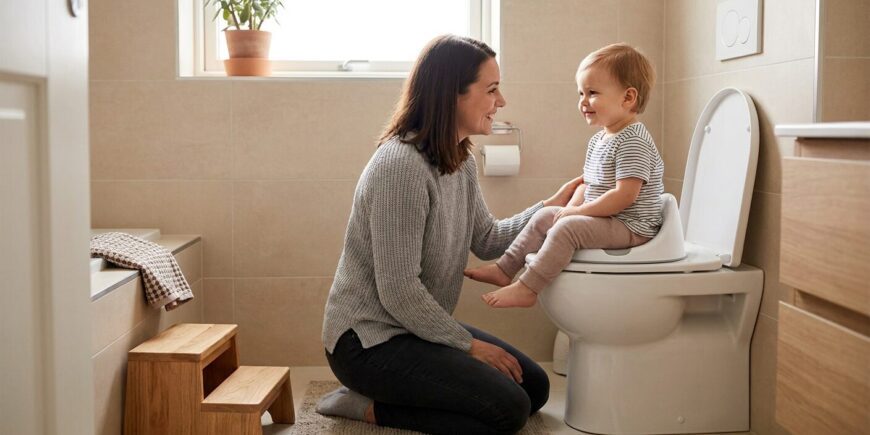
For parents looking for autism toilet training ABA guidance, this stage can feel exhausting. Accidents, bathroom refusal, short sitting tolerance, and mixed advice from different sources can make toilet training seem bigger than one daily routine should feel. The good news is that toileting is a self-care skill, and self-care skills can be taught in small, manageable steps.
Rather than treating toilet training as an all-or-nothing milestone, ABA uses task analysis to break the routine into teachable actions. That approach can help parents decide whether now is a good time to begin, how to build a routine their toddler can actually follow, and when it makes more sense to slow down and get extra support.
Why Toilet Training Can Feel More Complex for Some Autistic Toddlers
Toileting may look simple from the outside, but it depends on several different skills working together. A toddler may need to notice body cues, stop what they are doing, move to the bathroom, manage clothing, tolerate sitting, and complete hygiene steps afterward. For some autistic children, those pieces are harder because of sensory sensitivities, communication differences, transition challenges, or limited awareness of internal body signals.
That does not mean toilet training is impossible, and it does not mean every child should follow the same timeline. For toddlers, readiness often looks less like full independence and more like being able to participate with support. A child may not verbally ask to go yet, but they may tolerate the bathroom, accept a short routine, and respond to caregiver guidance.
Because caregiver consistency matters so much in early self-care routines, many families benefit from support around home carryover and daily practice. Articles about the role of parent training in ABA can be helpful when you are trying to apply the same plan across caregivers and settings.
The ROUTE Map for Toilet Training
R – Readiness
Readiness is not about waiting for a child to do every part of toileting alone. It is about looking for enough foundation to start without creating avoidable frustration. For toddlers, that may include tolerating bathroom entry, sitting briefly with support, having somewhat predictable wet or bowel movement patterns, and having caregivers who can stay consistent for a focused stretch of time.
It also helps to ask whether the routine at home is stable enough right now. If sleep, illness, travel, or major schedule changes are already making the day hard, it may be better to wait. And if there is constipation, pain, stool withholding, or major distress around the toilet, pause and address that first rather than pushing forward.
O – Obstacles
Before changing the whole plan, identify the main barrier. Some children resist the transition into the bathroom. Others will enter the bathroom but will not sit. Some sit without eliminating. Others can toilet but panic at flushing, wiping, or hand drying.
When you name the obstacle clearly, the plan becomes more useful. A child with sensory discomfort may need environmental changes. A child with limited communication may need a picture cue or an easy way to request the bathroom. A child who is not responding to praise alone may need stronger, more immediate reinforcement. Not every setback is a behavior problem, and not every accident means the plan is failing.
U – Unpack the Routine
Task analysis means breaking the routine into small, observable actions. Instead of saying “go potty,” you teach what that actually includes: walk to the bathroom, pull pants down, sit, eliminate, wipe, flush, pull pants up, wash hands, and return to the prior activity.
This matters because each step can break down for a different reason. A child may understand the goal but struggle with clothing, sitting tolerance, or the sound of the flush. When the routine is unpacked, you can prompt and support the exact step that needs help.
T – Teach and Track
Once the routine is broken down, parents can teach each step more clearly. That may include prompts, simple visuals, immediate reinforcement, and short data notes about what happened. Tracking is not about perfection. It is about noticing patterns so you can tell whether the routine is becoming easier or whether one part needs to change.
E – Evaluate Fit
A good toilet training plan should be reviewed as it goes. If a child is making gradual progress, continue. If one step keeps breaking down, adjust that step. If there is ongoing distress, stool withholding, pain, or very little progress despite consistency, it may be time to pause or bring in added support. Timelines vary, and realistic expectations protect both progress and dignity.
Build the Toileting Routine With Task Analysis
Transition to the bathroom
Start with the move into the bathroom, because many struggles begin before the child even gets there. Use short, predictable language such as “Bathroom time, then blocks,” along with a visual cue or picture icon if that helps. For toddlers, shorter walking routes, consistent timing, and fewer extra words often work better than long explanations.
Manage clothing
Pulling pants down and back up can be its own skill. If clothing is tight, hard to grip, or uncomfortable, the routine gets harder immediately. Elastic waistbands, soft fabrics, and easy-on clothing can reduce friction. If needed, teach clothing management as a separate practice step outside full toilet training times so the child can build success without pressure.
Sit and stay long enough
Some children need help learning how to sit briefly and feel physically secure on the toilet. A stable foot support can improve posture and reduce anxiety. Keep sits short at first. Forcing long sits usually increases resistance and makes the bathroom feel less predictable. The goal is to build tolerance gradually, not to win a power struggle.
Eliminate in the toilet
When you are teaching elimination in the toilet, timing matters. Watch for natural patterns in urination and bowel movements so practice happens when success is more likely. If a child eliminates in the toilet, pair that success with immediate reinforcement so the connection is clear. If a child sits but does not eliminate, note the pattern without adding pressure. Also keep medical factors in view. Pain, chronic constipation, and stool withholding can stop progress even when the teaching plan is otherwise sound.
Wipe, flush, and wash hands
The hygiene steps after elimination are part of the routine too. For toddlers, these may need to be taught as a separate mini-chain with caregiver help at first. A child may tolerate wiping but fear the flush, or they may wash hands only with prompting. Breaking these steps apart makes them easier to teach. This is also where families often see the value of practicing daily living skills in natural settings, which is part of how in-home and school-based ABA therapy services support generalization across real routines.
Parent Toilet Training Task Analysis Builder
Use this simple builder before you start and during the first one to two weeks of practice.
- Start
- Look for readiness signs such as bathroom tolerance, short sitting tolerance, and predictable patterns.
- Track when your child usually urinates or has bowel movements.
- Note medical red flags such as pain, constipation, or stool withholding.
- Decide whether all caregivers can follow the same routine.
- Choose a realistic time window instead of starting during a chaotic week.
- Set Up
- Review the bathroom environment for noise, lighting, seat comfort, and foot support.
- Choose simple visuals or picture cues if they help.
- Pick clothing that is easy to manage.
- Identify reinforcers that are motivating enough to matter in the moment.
- Set a brief sit schedule based on your child’s patterns.
- Choose a communication method for requesting the bathroom, such as a word, sign, picture, or device button.
- Support
- Write out the step-by-step task chain for your child’s routine.
- Decide what prompt level you will use for each step.
- Plan how you will respond to accidents in a neutral, consistent way.
- Keep notes on regressions, refusals, or new stressors.
- Set clear criteria for when to call a BCBA or pediatrician.
This kind of planning tool does not make toilet training rigid. It makes it easier to see what is working, where the routine is breaking down, and what to change first.
Teach the Routine With Prompting, Reinforcement, and Simple Tracking
Prompting works best when it matches the step that is hard. If your child can walk to the bathroom but will not pull pants down, focus there. If they can sit but will not stay long enough, support that step. A prompt might be a gesture, a model, a brief verbal cue, or a light physical assist when appropriate. The long-term goal is to fade prompts, not increase them.
Chaining helps because the routine is learned one part at a time. Some families start by helping with most of the steps and letting the child practice the last one more independently. Others begin with the earliest step and build forward. The best choice is the one that makes the routine feel understandable and achievable for the child.
Reinforcement should happen quickly enough that the child can connect it to the skill. Specific praise like “You sat on the toilet” or “You pulled your pants down” is more useful than general praise alone. For some toddlers, a preferred item, short activity, or small routine-based reward may be needed in addition to praise.
Tracking can stay simple. Write down sit times, successful voids, accidents, refusal patterns, and the exact step that broke down. If a parent sees that most accidents happen during transitions out of play or that bowel movement attempts trigger distress, that information can guide the next adjustment. This is also where structured caregiver coaching can help, and parent training in ABA can support more consistent implementation without turning the routine into a compliance exercise.
Use Visual Supports, Communication Supports, and Sensory Adjustments
Visual supports can reduce uncertainty. A simple bathroom icon, a two-step first/then card, or a short picture schedule may work better for a toddler than a long verbal reminder. Keep visuals portable and easy to understand. The goal is not to add more materials than your child needs. The goal is to make the routine easier to predict.
Communication supports matter too. A child does not have to speak to learn toileting skills. They may request the bathroom with a gesture, picture, sign, or device. If a child cannot easily communicate discomfort, urgency, or the need for help, the routine may break down even when they understand part of it.
Sensory adjustments are often just as important as teaching. The bathroom may echo. The toilet seat may feel cold. The flush may be too loud. Certain clothing may be irritating. Some children struggle with body-awareness cues and do not notice the need to go until the moment is urgent. Resources from Marcus Autism Center also emphasize preparation, consistency, and practical routines. Accommodations are not “giving in.” They are often what makes learning possible.
Troubleshoot Setbacks and Know When to Get Extra Support
Setbacks are common. Accidents may increase when routines change. A child may regress after illness, travel, school transitions, or inconsistent caregiver follow-through. When that happens, respond neutrally, return to the routine, and review the pattern rather than treating the setback as defiance.
A useful question is whether the child needs more time, a different setup, or a pause. If there is mild frustration but some progress, you may only need to simplify the routine or adjust the reinforcement. If there is severe distress, ongoing stool withholding, pain, or very little progress despite consistency, it is worth getting more support.
A BCBA can help identify the breakdown point, refine prompts, and shape the routine so it fits the child’s actual skills. A pediatrician should be part of the picture when constipation, pain, or medical concerns are involved. Families who want more support around self-care routines in natural environments may also explore ABA services that include home and school-based teaching or review insurance support options if access to care is part of the challenge. Aim Higher ABA, for example, emphasizes collaborative care and practical support in daily routines rather than one-size-fits-all expectations.
FAQ
How do you potty train a child with autism using ABA principles?
ABA-based toilet training usually starts by breaking the routine into small steps, identifying the main barrier, using prompts for the exact step that is hard, and reinforcing progress quickly and clearly. The plan should fit the child’s skills, sensory needs, and communication level rather than forcing a generic method.
What signs show an autistic toddler may be ready for toilet training?
Useful signs include tolerating the bathroom, sitting briefly with support, showing somewhat predictable wet or bowel movement patterns, and participating in routines with caregivers. Readiness does not mean full independence. Pain, constipation, stool withholding, or major distress are signs to slow down and assess further.
How can sensory issues affect toilet training?
Sensory issues can affect how a child experiences the bathroom, toilet seat, clothing, flush, hand dryer, and even transitions into the space. They can also affect body awareness, which makes it harder to notice the need to go. Adjusting the environment can be just as important as prompting the routine.
What if my child will sit on the toilet but not pee or poop there?
Look at timing, body patterns, and the specific step that is breaking down. A child may tolerate sitting but not yet connect the toilet with elimination, or they may be dealing with constipation, fear, or stool withholding. Keep the routine predictable, reinforce small wins, and get medical guidance when pain or withholding is involved.
How should parents respond to accidents or regression?
Respond neutrally, help the child clean up, and return to the routine without shame. Then review what changed. Regression often points to stress, inconsistency, a sensory barrier, or a mismatch between the plan and the child’s current skill level. It does not automatically mean the child cannot learn the skill.
When should a family get extra ABA or medical support?
Seek extra support when there is severe distress, persistent refusal, constipation, stool withholding, pain, or very little progress after a consistent effort. Families may also benefit from extra ABA support when multiple caregivers are involved and the routine is hard to carry over across home, childcare, and other daily environments.

 Previous Post
Leave Your Comment