

Families looking into ABA therapy often compare in-home ABA therapy and center-based ABA before deciding which option is the best fit for their child. Both approaches use the principles of Applied Behavior Analysis to support communication, social interaction, behavior, and daily living skills, but the setting can make a difference in how therapy is delivered.
Understanding the differences between in-home ABA and center-based ABA can help families choose a therapy model that matches their child’s needs, routines, and learning style.
At Aim Higher ABA, families can learn more about in-home ABA therapy and how home-based support can help children practice important skills in familiar environments.
What Is In-Home ABA Therapy?
In-home ABA therapy takes place in the child’s home. A Registered Behavior Technician (RBT) works directly with the child while following a treatment plan created by a Board Certified Behavior Analyst (BCBA).
Because therapy happens at home, children can practice communication, behavior, social interaction, and daily living skills during their regular routines.
For example, in-home ABA therapy may focus on:
- Following morning routines
- Brushing teeth and getting dressed
- Sitting at the table during meals
- Playing with siblings
- Cleaning up toys
- Transitioning between activities
- Completing bedtime routines
In-home ABA therapy is often chosen by families who want therapy to happen in a familiar setting.
What Is Center-Based ABA Therapy?
Center-based ABA therapy takes place in a clinic or therapy center. Children work with therapists in a structured environment designed specifically for learning and skill-building.
Center-based ABA therapy often focuses on:
- Structured learning activities
- Social interaction with peers
- Group play and shared activities
- Following classroom-like routines
- Practicing transitions between tasks
- Building school readiness skills
Some families prefer center-based ABA because it offers a more controlled environment with fewer distractions.
Key Differences Between In-Home ABA and Center-Based ABA
There are several important differences between in-home ABA therapy and center-based ABA therapy.
Therapy Environment
The biggest difference is the setting.
In-home ABA therapy takes place in the child’s natural environment, which may help children feel more comfortable and allow them to practice routines in real-life situations.
Center-based ABA therapy happens in a structured clinic environment with dedicated therapy spaces and fewer distractions.
Parent Involvement
Parent involvement is often higher in in-home ABA therapy because parents can observe sessions, participate in routines, and practice strategies alongside the therapist.
In center-based ABA therapy, parents may still be involved, but they are not always present during the entire session.
Social Opportunities
Center-based ABA therapy may provide more opportunities for children to interact with peers, practice group activities, and develop classroom-like skills.
In-home ABA therapy may involve social practice with siblings, parents, or other family members, but there may be fewer opportunities for peer interaction.
Daily Living Skills
In-home ABA therapy can be especially helpful for daily living skills because children practice those routines in the place where they naturally happen.
For example, children can practice brushing teeth in their own bathroom, eating meals in their own kitchen, and cleaning up toys in their own playroom.
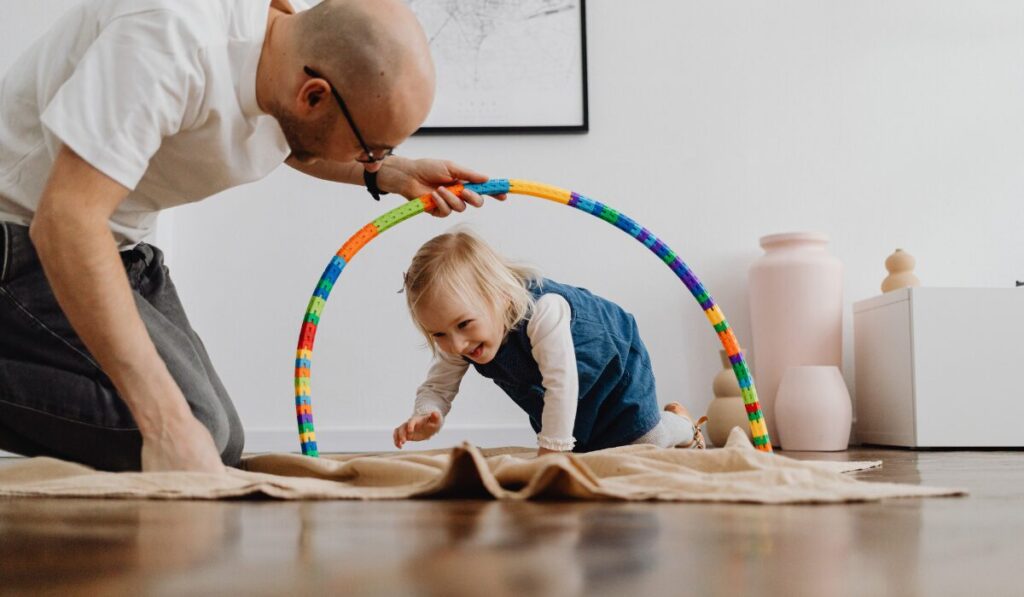
Center-based ABA may still address daily living skills, but it may not happen in the child’s actual home environment.
Structure and Distractions
Center-based ABA therapy often provides a more controlled setting with fewer distractions, which may help some children stay focused.
In-home ABA therapy may involve more distractions because the child is surrounded by toys, siblings, television, pets, and other household routines.
However, these distractions can also create opportunities to teach real-life coping skills and flexibility.
Pros of In-Home ABA Therapy
Many families choose in-home ABA therapy because it offers several unique benefits.
Some of the most common benefits of in-home ABA therapy include:
- Therapy in a familiar environment
- Greater parent involvement
- Support with daily living skills
- Flexible scheduling options
- Real-life practice with routines
- Reduced travel time for families
- More individualized attention during sessions
In-home ABA therapy can be especially helpful for children who feel overwhelmed in new settings or who need support with home routines.
Pros of Center-Based ABA Therapy
Center-based ABA therapy also offers several benefits for some children.
These benefits may include:
- Structured learning environments
- Fewer distractions
- Opportunities for peer interaction
- Group activities and social practice
- Exposure to classroom-like routines
Center-based ABA therapy may be helpful for children who enjoy social interaction, need help with school readiness, or respond well to structured environments.
Which Children May Benefit Most From In-Home ABA Therapy?
In-home ABA therapy may be a good fit for children who:
- Need support with daily routines
- Feel more comfortable at home
- Have difficulty with transitions
- Need more parent involvement
- Need help with behaviors that happen at home
- Struggle in unfamiliar settings
Families who are interested in home-based support can explore in-home ABA therapy services to learn how therapy can be personalized around the child’s home environment.
Which Children May Benefit Most From Center-Based ABA Therapy?
Center-based ABA therapy may be a better fit for children who:
- Need more social interaction with peers
- Benefit from structured environments
- Need classroom-readiness support
- Work well in group settings
- Need fewer distractions during learning
Some families may even choose a combination of in-home ABA therapy and center-based ABA therapy depending on their child’s needs.
Questions Families Should Ask ABA Providers
Before choosing a therapy setting, families may want to ask providers several important questions.
These questions may include:
- How are therapy goals selected?
- How much parent involvement is expected?
- What does a typical session look like?
- How often does the BCBA supervise therapy?
- Are social skills included in treatment?
- How are daily living skills addressed?
- What happens if goals need to change over time?
- Can therapy be adjusted if the current setting is not working?
Asking these questions can help families better understand which therapy option may be the best fit.
Balancing Flexibility and Structure
Some families find that their child benefits from a balance of both flexibility and structure. In-home ABA therapy can help children practice real-life routines in familiar settings, while center-based ABA can offer more opportunities for peer interaction and structured learning. Understanding how a child responds in different environments can help families make a more confident therapy decision.
Conclusion
There is no single therapy setting that works for every child. Some children benefit most from in-home ABA therapy because they learn best in familiar environments and need support with routines at home. Others may do better in center-based ABA therapy because they enjoy structure, peer interaction, and classroom-like activities.
The right choice depends on the child’s needs, goals, personality, and family routine.
Families who are interested in learning more about in-home ABA therapy can explore how home-based support may help children build communication, behavior, social, and daily living skills.
FAQs
What is the difference between in-home ABA therapy and center-based ABA therapy?
In-home ABA therapy takes place in the child’s home, while center-based ABA therapy takes place in a clinic or therapy center.
Which is better: in-home ABA therapy or center-based ABA therapy?
Neither option is better for every child. The right choice depends on the child’s needs, goals, and how they learn best.
Does in-home ABA therapy include parent involvement?
Yes, in-home ABA therapy often includes more parent involvement because families can observe sessions and practice strategies at home.
Does center-based ABA therapy provide more social opportunities?
Yes, center-based ABA therapy may provide more peer interaction, group activities, and classroom-like experiences.
Can children work on daily living skills during in-home ABA therapy?
Yes, in-home ABA therapy is often very effective for daily living skills because children practice routines in their own environment.
Which children may benefit most from in-home ABA therapy?
Children who need support with routines, behaviors at home, and parent involvement may benefit most from in-home ABA therapy.
Can families switch between in-home ABA therapy and center-based ABA therapy?
Yes, some families may choose to switch settings or combine both options depending on the child’s needs and progress.

 Previous Post
Leave Your Comment