

Speech and language development plays a central role in how children express needs, build relationships, and participate in daily routines. When communication skills are delayed or limited, families often look for structured support, including searches for aba therapy near me, to better understand what services may help. Among evidence-based interventions, ABA Approaches are widely used to support meaningful progress in expressive and receptive language skills through systematic assessment and individualized programming.
This article explores how applied behavior analysis can address speech and language challenges in a clinical, organized manner while remaining practical for families seeking guidance.
Understanding Speech and Language Challenges
Speech refers to the physical production of sounds and words, while language encompasses understanding and using words, sentences, and nonverbal systems to communicate meaning. Some children may struggle with articulation, while others may have difficulty forming sentences, following directions, or initiating conversations.
Challenges can include:
- Limited vocabulary
- Difficulty requesting needs
- Reduced conversational skills
- Trouble understanding questions or instructions
- Repetitive or scripted speech
- Minimal use of gestures or eye contact
Because communication affects academic, social, and daily living skills, early and structured intervention is important.
The Role of ABA in Communication Development
Applied behavior analysis focuses on identifying observable behaviors and teaching new skills through reinforcement, repetition, and data tracking. In the area of communication, clinicians break down complex language abilities into smaller, teachable components.
Rather than assuming speech will develop naturally over time, therapists conduct structured assessments to determine:
- Current expressive and receptive language levels
- Preferred communication methods (verbal, gestures, picture systems, devices)
- Motivation for communication
- Environmental factors influencing responses
From there, individualized plans are developed using ABA Approaches designed to promote measurable and functional communication growth.
Functional Communication Training
One of the most widely used strategies involves teaching children to replace challenging behaviors with clear communication. For example, instead of crying or withdrawing when a preferred item is unavailable, a child may learn to request help or ask for a break.
Functional Communication Training (FCT) typically includes:
- Identifying the purpose of the current behavior
- Teaching an appropriate alternative phrase or response
- Reinforcing the new communication consistently
- Gradually increasing expectations
Over time, this structured process strengthens purposeful communication while reducing frustration.
Building Expressive Language Skills
Expressive language includes requesting, labeling, answering questions, and participating in conversations. ABA programs often introduce these skills in a carefully sequenced manner.
Teaching Requests (Mands)
Learning to request is often the first priority because it directly benefits the child. Therapists create motivating situations, prompt appropriate language, and immediately reinforce successful attempts.
Expanding Vocabulary
Clinicians may use discrete trial instruction or natural environment teaching to introduce new words. Words are practiced across settings to ensure generalization.
Developing Sentence Structure
Once single-word responses are consistent, therapists gradually model and prompt longer phrases, such as “I want juice” instead of “juice.”
Through repeated practice and reinforcement, children build confidence and clarity in expression.
Strengthening Receptive Language
Receptive language involves understanding spoken words, instructions, and questions. Some children may appear inattentive when the primary challenge is actually comprehension.
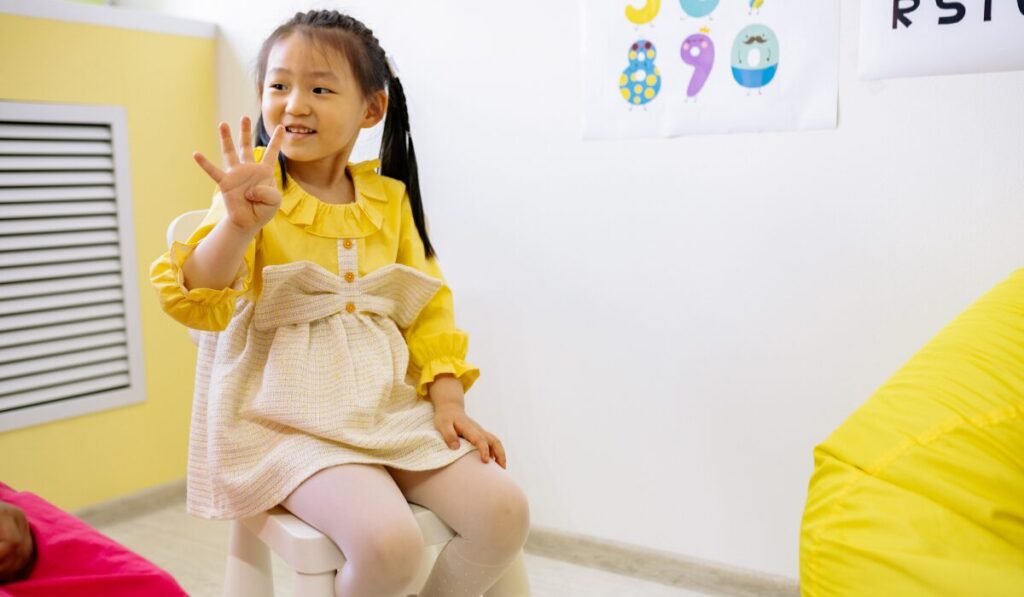
Intervention may include:
- Following one-step and multi-step directions
- Identifying objects by name
- Responding to “who,” “what,” and “where” questions
- Understanding prepositions and descriptive terms
ABA Approaches for receptive language rely on consistent modeling, repetition, and gradual increases in complexity. Data collection ensures that mastery is objective and measurable rather than assumed.
Natural Environment Teaching
While structured table-based instruction has value, communication must also occur in everyday contexts. Natural Environment Teaching (NET) incorporates learning into play, meals, and daily routines.
For example:
- During snack time, a therapist may prompt the child to request specific foods.
- During play, the child may practice labeling actions or asking peers to join.
- During transitions, the child may use words to indicate readiness or ask questions.
These opportunities allow ABA Approaches to promote functional language that transfers beyond therapy sessions.
Augmentative and Alternative Communication (AAC)
For children who have limited verbal speech, alternative systems may be introduced. These can include picture exchange systems or speech-generating devices.
The goal is not to replace verbal speech unnecessarily but to ensure that the child has a reliable method to communicate. Research consistently shows that access to AAC can actually support verbal development rather than hinder it.
When implemented within structured ABA programming, alternative communication systems are taught systematically, reinforced consistently, and gradually expanded.
Generalization Across Settings
A key element of communication intervention is ensuring that skills transfer across environments. A child who requests items during therapy must also be able to request at home, school, and in the community.
Clinicians may collaborate with families who are researching aba therapy clinics near me to ensure services align with school and home goals.
Generalization strategies include:
- Practicing with multiple people
- Using varied materials
- Changing environments gradually
- Fading prompts systematically
Without this step, language skills may remain limited to one setting.
Data Collection and Progress Monitoring
Objective measurement is central to applied behavior analysis. Every communication target—whether labeling, requesting, or answering questions—is tracked regularly.
Data helps clinicians determine:
- When to increase difficulty
- When additional support is needed
- Whether reinforcement strategies remain effective
- If goals should be modified
This systematic review ensures that ABA Approaches remain individualized and responsive rather than static.
Collaboration with Families
Parents and caregivers play a crucial role in reinforcing communication skills. Therapy sessions alone are not sufficient for long-term change.
Professionals may provide:
- Training on prompting strategies
- Guidance on reinforcing appropriate language
- Visual supports for home routines
- Structured practice activities
Families searching for best aba therapy atlanta ga or similar services often benefit from asking about caregiver involvement and communication-focused goals.
When families and clinicians work collaboratively, children experience more consistent expectations and greater opportunities to practice.
Addressing Social Communication
Beyond requesting and labeling, children may need support with conversational turn-taking, topic maintenance, and understanding social cues.
Intervention may involve:
- Structured peer play sessions
- Role-playing conversations
- Video modeling
- Reinforcement for reciprocal exchanges
ABA Approaches in this area break social communication into smaller, teachable components, allowing gradual progress toward more natural interactions.
Integrating Speech and ABA Services
Speech-language pathologists and behavior analysts often collaborate to ensure goals align. While speech therapy focuses heavily on articulation and language structure, applied behavior analysis emphasizes behavior-based teaching strategies and reinforcement systems.
When coordinated effectively, these services complement each other. Structured ABA Approaches can increase opportunities for speech practice, while speech specialists guide language complexity and clarity.
This interdisciplinary model supports comprehensive communication growth.
Ethical and Individualized Programming
Communication goals must always reflect the child’s developmental level, learning pace, and family priorities. Ethical practice requires:
- Informed consent
- Respect for individual communication styles
- Cultural sensitivity
- Ongoing reassessment
Intervention should promote independence and meaningful participation, not rigid or unnecessary expectations.
Conclusion
Speech and language challenges can significantly affect daily life, academic performance, and peer relationships. Through systematic assessment, structured teaching, reinforcement, and careful data tracking, ABA Approaches offer an organized framework for building expressive, receptive, and social communication skills.
When implemented consistently across settings and supported by family collaboration, these strategies can foster clearer communication and increased independence over time.
A dedicated clinical team can provide individualized evaluation and intervention planning tailored to each child’s communication needs. Through structured guidance and collaborative support, children are given opportunities to develop skills that help them participate more fully in home, school, and community environments.
FAQs
How do ABA Approaches help improve speech and language skills?
ABA Approaches focus on breaking communication skills into small, teachable steps. Therapists identify a child’s current level of expressive and receptive language, then use structured instruction, reinforcement, and repetition to build new skills. Progress is measured consistently to ensure learning is meaningful and functional.
What types of speech and language goals are typically addressed?
Goals may include requesting needs, labeling objects, answering questions, following directions, improving sentence length, and participating in conversations. For some children, alternative communication systems may also be introduced to ensure they have a reliable way to express themselves.
Is ABA only helpful for children who are nonverbal?
No. ABA-based communication support can benefit children across a range of language levels. Some children need support developing first words, while others may work on expanding sentence complexity or improving conversational skills. Programs are individualized based on assessment results.
How long does it take to see progress in communication skills?
Progress varies depending on the child’s starting level, consistency of intervention, and opportunities for practice outside of sessions. Some children show measurable gains within a few months, while others may require longer-term intervention. Ongoing data collection helps determine whether strategies are effective.
Can ABA be combined with speech therapy?
Yes. Many children benefit from coordinated services between behavior analysts and speech-language pathologists. While speech therapy may focus more on articulation and language structure, ABA emphasizes structured teaching methods and reinforcement systems. Collaboration supports comprehensive development.
What role do parents play in communication development?
Parent involvement is essential. Caregivers are often trained to prompt and reinforce communication during daily routines such as meals, play, and transitions. Consistency across environments increases the likelihood that skills will generalize beyond therapy sessions.
How do I know if my child needs communication-focused intervention?
If a child has difficulty expressing needs, following directions, engaging in conversation, or understanding language, a professional evaluation may be helpful. A comprehensive assessment can determine strengths, areas of need, and appropriate next steps.

 Previous Post
Leave Your Comment